I still remember the night I tried to impress my friends with a quick seafood dinner, only to end up with a batch of sardines that were as limp as yesterday’s toast. The fish had a faint, almost bitter undertone that left everyone asking if I had accidentally bought the wrong kind. I was about to toss them into the trash when a sudden craving for Mediterranean zest hit me like a rogue wave. That moment became the turning point that led me to discover the ultimate Herb Crusted Roasted Sardines recipe, a dish that turns humble, inexpensive fish into a gourmet experience that will have your taste buds doing backflips.
Picture this: a sizzling pan, the sharp scent of garlic mingling with the earthy aroma of dried oregano, and the faint metallic tang of fresh sardines hitting the hot oil. The sound is unmistakable—an audible pop that signals the start of transformation. The heat caramelizes the herbs, creating a crust that crackles like a fine crusted pastry. As you lift a sardine from the skillet, the golden edges gleam, and the interior stays moist, juicy, and briny, almost like a secret pocket of sea captured in a bite. Every element—texture, flavor, aroma—converges to form a dish that is both rustic and refined.
What sets this version apart is the delicate balance between the sharp bite of French mustard, the citrus lift of lemon, and the herbal warmth of oregano. The sardines are not simply coated; they’re enrobed in a flavor matrix that enhances their natural brininess without overwhelming it. The result is a dish that feels like a celebration of the sea, yet is so approachable that you can whip it up on a weekday after a long day. I dare you to taste this and not go back for seconds—trust me, it’s impossible.
If you’ve ever tried to make roasted sardines, you’ve probably struggled with overcooking or under-seasoning. That’s where this recipe shines: it’s a step-by-step guide that takes you from raw fish to a perfectly roasted masterpiece, with a few clever hacks along the way. By the end of this post, you’ll wonder how you ever made it any other way, and you’ll have the confidence to serve a dish that impresses even the most skeptical of diners.
What Makes This Version Stand Out
- Flavor: The mustard and lemon create a bright, tangy base that cuts through the richness of the sardines, giving each bite a lively punch.
- Texture: The herb crust turns crispy, while the interior remains tender, offering a satisfying contrast that feels like a culinary handshake.
- Ingredient Quality: Using fresh, locally sourced sardines ensures a clean, oceanic flavor that is hard to replicate with canned alternatives.
- Simplicity: With fewer than ten ingredients, the recipe is quick to assemble, making it ideal for weeknight dinners or spontaneous gatherings.
- Make‑Ahead Potential: The herb mixture can be prepped a day ahead, and the fish can be marinated overnight for even deeper flavor.
- Versatility: Serve them on a bed of greens, atop a warm slice of crusty bread, or as an antipasto on a platter for a party.
- Crowd Reaction: Friends who are skeptical about sardines often leave the table asking for the recipe, proving the dish’s universal appeal.
- Nutrition: Packed with omega‑3 fatty acids, protein, and essential minerals, it’s a healthy option that doesn’t compromise on taste.
Alright, let’s break down exactly what goes into this masterpiece…
Inside the Ingredient List
The Flavor Base
The combination of garlic, French mustard, lemon juice, and dry oregano forms the backbone of this recipe. Garlic brings warmth and depth, while mustard provides a subtle heat that awakens the palate. Lemon juice injects brightness, cutting through the fish’s natural oiliness, and oregano adds a herbaceous earthiness that grounds the dish. Skipping any of these would leave the sardines feeling flat, as if they’re missing a vital chord in a musical score.
The Texture Crew
Paprika and dry onion flakes are not just for flavor; they add a layer of crunch and a gentle sweetness that complements the fish’s briny bite. The paprika’s smoky undertone gives the crust a golden hue, while the onion flakes create subtle pockets of caramelized flavor. If you omit them, the crust will still be tasty but will lack that delightful textural contrast that makes each bite memorable.
The Unexpected Star
Fresh parsley is the unsung hero that ties everything together. Its bright, slightly peppery taste lifts the dish, preventing it from feeling too heavy. Parsley also adds a splash of color, turning the plate into a visual feast. If you’re in a pinch, a handful of chopped cilantro can substitute, offering a different but equally vibrant flavor profile.
The Final Flourish
Olive oil is the secret to achieving that coveted crispy crust. It coats the sardines, allowing the herbs to adhere and caramelize without the fish drying out. The amount is crucial; too little oil and the fish will stick, too much and it will become greasy. A light drizzle is all you need to get that perfect golden finish.
Everything’s prepped? Good. Let’s get into the real action…
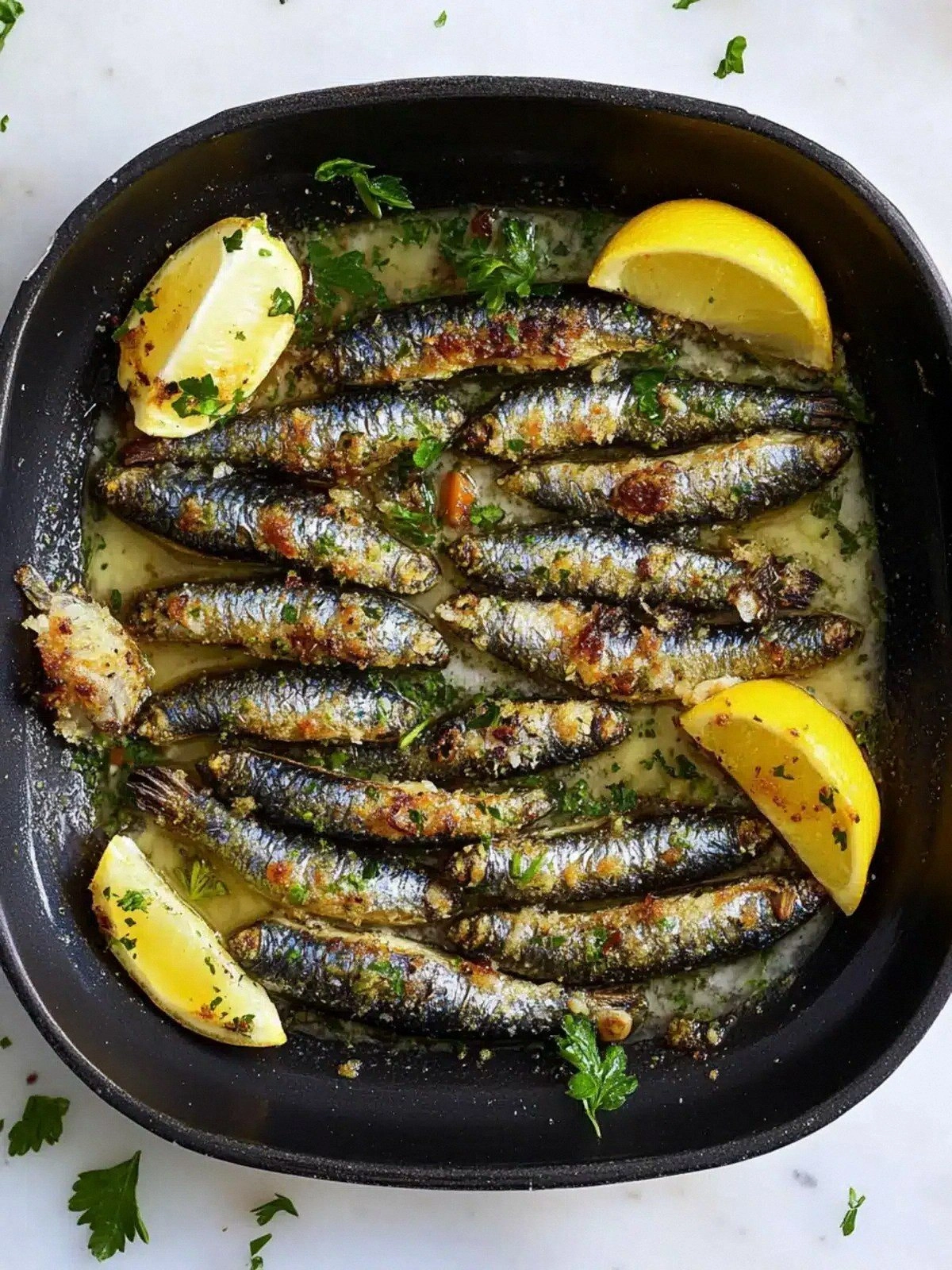
The Method — Step by Step
- Begin by patting the sardines dry with paper towels. This step is essential for a crisp crust; moisture is the enemy of crunch. Once dry, rinse them under cold water, then pat them again. Set them aside on a clean cutting board.
- In a small bowl, whisk together the minced garlic, French mustard, lemon juice, dry oregano, paprika, dry onion flakes, salt, and freshly ground pepper. The mixture should be thick enough to cling to the fish but not so watery that it drips off. Taste the blend; it should be bright and slightly spicy.
- Heat a large oven‑proof skillet over medium‑high heat. Add the olive oil and let it shimmer—no smoking, just a gentle glow. When the oil is hot, place the sardines skin side down. The sizzle you hear is the beginning of flavor.
- Let the sardines cook for 2 minutes on the first side. Don’t rush the flipping; this allows the skin to crisp and the herbs to start caramelizing. When the underside turns golden and releases easily from the pan, flip the sardines carefully.
- Spread the herb mixture evenly over the top of each sardine. The coating should form a thin, even crust that adheres to the fish. If you’re feeling generous, add a bit more mustard for extra zing.
- Transfer the skillet to a preheated oven at 400°F (200°C). Roast for 6–8 minutes, or until the sardines are opaque and the crust is golden. The key is to keep an eye on the edges; they should pull away slightly from the pan when done.
- Remove the skillet from the oven and sprinkle fresh parsley over the sardines. The parsley’s bright aroma will awaken the senses, making the dish feel fresh and lively. Let the fish rest for a minute to settle.
- Serve immediately, accompanied by crusty bread or a light salad. The sardines should still be warm, and the crust should retain its crunch. Pair with a glass of chilled white wine for a complete Mediterranean experience.
That’s it — you did it. But hold on, I've got a few more tricks that'll take this to another level…
Insider Tricks for Flawless Results
The Temperature Rule Nobody Follows
Many cooks underestimate the importance of pan temperature. If the skillet is too hot, the oil will smoke and the sardines will burn on the outside before the inside cooks. Aim for a medium‑high heat that produces a gentle hiss when the oil is added. This allows the crust to form without scorching the fish.
Why Your Nose Knows Best
The aroma of garlic and oregano is a reliable indicator that the herbs are caramelizing. When you smell a warm, nutty scent, you know the crust is developing. Trust your nose; it’s the best judge of readiness.
The 5-Minute Rest That Changes Everything
After removing the sardines from the oven, let them rest for five minutes. This pause allows the juices to redistribute, ensuring each bite is juicy rather than dry. It also lets the crust settle, making it easier to pick up and serve.
Avoiding the “Fishy” Aftertaste
If you’ve experienced a lingering fishy taste, it may be due to using older fish. Always choose sardines that have a fresh, briny smell. A quick rinse with cold water before cooking can also help reduce any off odors.
The Secret of a Crispy Skin
Patting the sardines dry is non-negotiable. Any moisture on the surface will cause the oil to splatter and the crust to steam instead of crisp. A quick pat with a paper towel before coating is the simplest trick for a perfect crust.
Creative Twists and Variations
This recipe is a playground. Here are some of my favorite ways to switch things up:
Mediterranean Baguette Bites
Slice crusty baguette into thin rounds, toast them lightly, and top each with a roasted sardine and a drizzle of olive oil. Finish with a sprinkle of chopped dill for a refreshing twist that pairs wonderfully with a glass of rosé.
Spicy Cajun Sardines
Swap the oregano for a blend of paprika, cayenne, and thyme. Add a dash of hot sauce after roasting to give the dish a smoky, fiery kick. Serve over rice to balance the heat.
Herb‑Infused Pesto Drizzle
Blend fresh basil, pine nuts, garlic, parmesan, and olive oil into a quick pesto. Drizzle the pesto over the sardines before serving for an herbaceous, creamy finish that elevates the dish.
Lemon‑Garlic Butter Finish
Melt butter with minced garlic and a squeeze of lemon juice, then pour over the sardines just before serving. The buttery sauce coats each fish, adding richness and a glossy sheen.
Sardine Salad Wrap
Shred the roasted sardines and mix with diced cucumber, red onion, and a light vinaigrette. Spoon the mixture into whole‑grain wraps for a portable, Mediterranean‑inspired lunch.
Tropical Pineapple Glaze
Simmer pineapple juice with brown sugar and a splash of soy sauce until it reduces to a thick glaze. Brush the glaze over the sardines in the last minute of roasting for a sweet, tangy finish that pairs well with coconut rice.
Storing and Bringing It Back to Life
Fridge Storage
Store leftover sardines in an airtight container in the refrigerator for up to 2 days. Keep them on a paper towel to absorb excess moisture. When ready to eat, reheat in a skillet over medium heat for 1–2 minutes until warmed through.
Freezer Friendly
For longer storage, wrap each sardine individually in parchment paper and place them in a freezer bag. They’ll keep for up to 3 months. Thaw overnight in the refrigerator before reheating as described above.
Best Reheating Method
Add a splash of water to the pan before reheating to create steam, which will restore moisture without drying out the fish. Cover the skillet for a minute to trap the steam, then remove the lid to crisp the crust again.