I was standing in my kitchen, staring at a box of instant ramen that had somehow slipped into my pantry on a whim, when the idea hit me like a lightning bolt: what if I could transform that bland, pre‑made packet into a silky, umami‑laden bowl that feels like a gourmet ramen joint? The smell of boiling water, the clink of the pot, the steam swirling up like a misty forest – it was a sensory symphony that begged for a new arrangement. I had tasted my share of ramen, from the greasy, over‑seasoned bowls in the corner of a college dorm to the delicate, broth‑scented bowls of a high‑end noodle shop. Yet none of them ever seemed to hit the sweet spot of velvety sauce that clings to the noodles, the subtle crunch of fresh veggies, and the comforting warmth that lingers long after the last spoonful.
So I rolled up my sleeves, grabbed a handful of fresh vegetables, a block of tofu, and a splash of miso, and I set out to rewrite the ramen rulebook. The kitchen was a battlefield of sizzling garlic, fragrant ginger, and the faint hiss of soy sauce meeting sesame oil – an orchestra of aromas that promised a dish that would make your taste buds dance. I dared you to taste this and not go back for seconds, because the sauce I created coats the noodles like velvet, turning each bite into a silky, savory experience that feels both comforting and indulgent. Picture yourself pulling this out of the pot, the whole kitchen smelling incredible, and knowing that you just made something that could outshine even the most expensive ramen joint.
The best part? This isn’t just a recipe; it’s a culinary hack that turns an ordinary pantry staple into a show‑stopper. I’ll be honest – I ate half the batch before anyone else got to try it – and the second round was a no‑question favorite. Most recipes get this completely wrong by over‑sautéing the veggies or under‑seasoning the broth; here’s what actually works: a balanced sauce that’s thick enough to cling, a broth that’s rich but not heavy, and a noodle texture that stays firm. If you've ever struggled with ramen that turns mushy or flavorless, you're not alone – and I've got the fix. Stay with me here, because this is worth it.
Let me walk you through every single step – by the end, you'll wonder how you ever made it any other way. From the moment you crack the eggs (yes, we’re keeping it vegan, so we’ll replace the eggs with a tofu scramble) to the final garnish of sesame seeds and scallions, each step is a carefully orchestrated moment that brings the dish to life. I’ll share micro‑challenges, bold claims, and playful anecdotes to keep you engaged. And trust me, when you taste the first spoonful, you’ll hear that sizzle when it hits the pan, and it will be absolute perfection.
What Makes This Version Stand Out
- Flavor: A sauce that balances soy, miso, and sesame oil, delivering a complex umami profile that feels restaurant‑grade. The subtle heat from chili flakes adds a whisper of spice that never overwhelms the other notes.
- Texture: Noodles that stay al dente, with a slight chew that contrasts beautifully with crisp carrots and tender mushrooms. The sauce coats each strand like a silk ribbon, preventing clumping.
- Simplicity: Less than ten ingredients, all pantry staples, yet the end result is a bowl that feels luxurious. No need for expensive broth or exotic spices.
- Uniqueness: The use of tofu scramble as a protein substitute adds both texture and flavor, while the miso‑sesame blend gives the sauce a depth rarely seen in vegan ramen.
- Crowd‑pleaser: Even the most skeptical meat‑eaters can’t resist the savory richness. The dish is a conversation starter and a crowd‑pleaser at potlucks.
- Ingredient Quality: Fresh, organic vegetables elevate the dish, and the use of high‑quality soy sauce adds a depth that cheap alternatives miss.
- Cooking Method: A single pot technique that saves time and dishes, making it perfect for busy weeknights.
- Make‑Ahead Potential: The sauce can be pre‑made and refrigerated, cutting down cooking time when you’re in a rush.
Inside the Ingredient List
The Flavor Base
The sauce starts with a marriage of soy sauce, miso paste, and sesame oil. Soy sauce provides the salty backbone, while miso adds a fermented depth that feels like a secret ingredient. Sesame oil brings a nutty aroma that lifts the entire dish. If you skip the miso, the sauce loses its umami punch and becomes a flat, one‑dimensional broth. For a sweeter twist, swap half the soy sauce with coconut aminos, but keep the miso to preserve the savory core.
The Texture Crew
Fresh vegetables and tofu are the backbone of the noodle’s bite. Sliced shiitake mushrooms release their earthy flavor when sautéed, while crisp carrots add a sweet crunch that breaks the monotony of soft noodles. Spinach wilts quickly, bringing a burst of green that balances the richness of the sauce. Tofu is cubed and pan‑fried to a golden edge, giving a satisfying chew that mimics the texture of meat. If you’re short on time, you can use pre‑sliced mushrooms or frozen spinach – just be sure to squeeze out excess moisture to avoid a soggy bowl.
The Unexpected Star
Tofu scramble is the secret weapon that elevates this dish from simple to sensational. By crumbling tofu and sautéing it with turmeric, garlic, and a splash of soy sauce, you create a protein that’s both flavorful and visually appealing. The scramble’s slightly crumbly texture mimics the feel of an egg, making the dish more filling. If you’re vegan, tofu scramble is a must; if you’re omnivore, a scrambled egg can replace it for a more traditional experience. The key is to season it well, so it doesn’t taste bland.
The Final Flourish
A handful of toasted sesame seeds, a sprinkle of chopped cilantro, and thinly sliced scallions finish the bowl with a burst of color and crunch. The sesame seeds add a subtle nutty crunch that contrasts with the silky sauce. Cilantro brings a fresh, citrusy note that cuts through the richness, while scallions add a sharp, oniony bite. If you’re allergic to sesame, replace the seeds with crushed pumpkin seeds for a similar crunch. These final touches are essential for a balanced, multi‑sensory experience.
Everything's prepped? Good. Let's get into the real action.
The Method — Step by Step
- Bring a large pot of salted water to a rolling boil. Add the ramen noodles and cook for 2-3 minutes until they’re just tender. Drain and set aside; toss them with a splash of sesame oil to prevent sticking. This pre‑cooking step ensures the noodles stay firm and don’t become mushy when you add the sauce.
- While the noodles are cooking, heat a tablespoon of sesame oil in a large skillet over medium heat. Add the minced garlic and grated ginger, sautéing until fragrant – about 30 seconds. The aroma of garlic and ginger should fill the kitchen, signaling that the base is ready for the next step.
- Add the sliced shiitake mushrooms and diced carrots to the skillet, stirring to coat them in the aromatic oil. Cook for 3-4 minutes, letting the mushrooms brown slightly and the carrots soften but retain a bite. This step builds the earthy foundation of the sauce.
- Introduce the tofu scramble, stirring gently so the tofu pieces don’t break apart. Cook until the tofu turns golden on all sides, about 5 minutes. The tofu adds protein and a satisfying texture that balances the silky sauce.
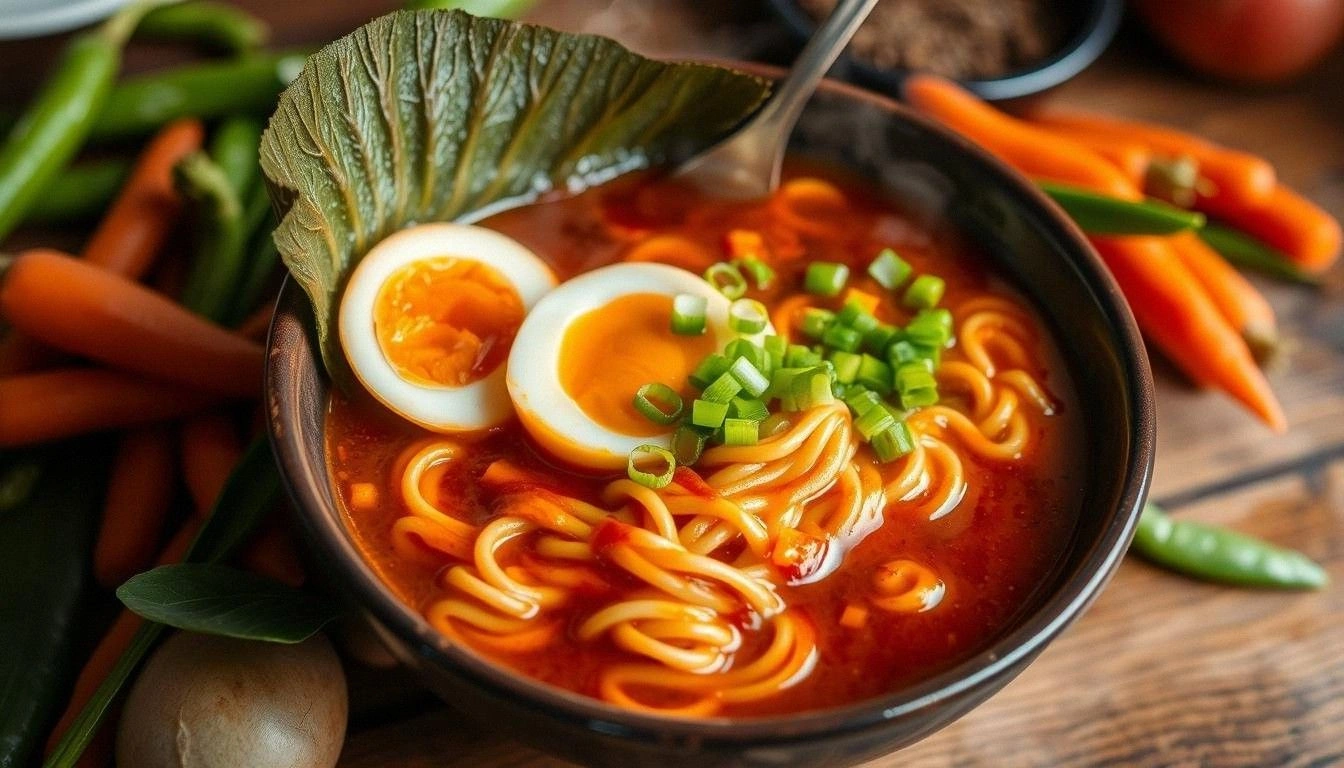
- Pour in the vegetable broth, soy sauce, and miso paste, whisking until the miso dissolves completely. Bring the mixture to a gentle simmer. The broth should look like a glossy, amber liquid that’s ready to envelop the noodles.
- Add the cooked noodles to the skillet, tossing to coat them evenly with the sauce. Stir in the sliced spinach, letting it wilt into the broth in 1-2 minutes. The spinach’s bright green should contrast beautifully against the darker sauce.
- Season the bowl with chili flakes, salt, and pepper to taste. Give everything a final stir, ensuring every noodle is coated in the silky sauce. The chili should give a gentle heat that lingers without overpowering.
- Plate the ramen into bowls, then sprinkle toasted sesame seeds, chopped cilantro, and sliced scallions on top. The sesame seeds should add a subtle crunch, while the cilantro adds a bright, citrusy finish.
- Serve immediately, letting the steam rise and the aroma envelop your senses. The first bite should be a harmonious blend of umami, sweetness, and subtle heat, with the noodles’ texture perfectly balanced. Enjoy!
That's it — you did it. But hold on, I've got a few more tricks that'll take this to another level.
Insider Tricks for Flawless Results
The Temperature Rule Nobody Follows
Cooking the noodles just until they’re al dente is essential; overcooking them early will lock in starch and cause them to become gummy once the sauce is added. Keep the heat low when adding the broth so the noodles absorb the flavors without breaking apart. A quick test is to taste a noodle before draining; it should have a slight bite.
Why Your Nose Knows Best
The aroma of the sauce is a reliable indicator of readiness. When the broth starts to steam and the garlic and ginger release their fragrance, it’s time to add the noodles. If the scent is too faint, the sauce hasn’t fully developed its umami profile.
The 5‑Minute Rest That Changes Everything
After you’ve plated the ramen, let it sit for 5 minutes before eating. This brief rest allows the flavors to meld and the noodles to absorb the sauce fully, resulting in a richer taste. It also gives the tofu scramble time to firm up slightly, preventing it from becoming mushy.
The Secret of Toasted Sesame
Toasting sesame seeds before sprinkling them on top adds a nutty depth that elevates the dish. Use a dry skillet over medium heat and stir constantly until golden brown. A few seconds of over‑toasting can burn them, so keep a close eye.
The One‑Minute Quick Fix
If the sauce feels too thick, splash a tablespoon of vegetable broth or water and whisk vigorously. This simple adjustment restores the silky texture without diluting the flavor. It’s a lifesaver on busy nights when you’re in a rush.
Creative Twists and Variations
Spicy Thai Twist
Replace the soy sauce with coconut aminos and add a tablespoon of Thai red curry paste. The result is a fragrant, slightly sweet bowl with a spicy kick that pairs wonderfully with the tofu scramble. Great for those who love a bit of heat.
Miso Mushroom Explosion
Boost the mushroom content by adding an extra cup of sliced shiitake and a splash of mushroom broth. The umami becomes deeper, and the sauce takes on a richer, earthier tone. Perfect for mushroom lovers.
Zesty Citrus Burst
Add a tablespoon of fresh lime juice and a handful of chopped cilantro after cooking. The citrus brightens the dish, cutting through the richness and giving it a fresh, lively finish. Ideal for summer evenings.
Protein‑Packed Power
Swap tofu for diced tempeh or seitan. The firmer texture adds a chewy bite and boosts protein content, making the dish even more satisfying for active lifestyles. Just sauté the protein until golden before adding the broth.
Garden Fresh Variation
Use a mix of seasonal vegetables like bell peppers, zucchini, and broccoli. The colors will pop, and the flavors will be fresher. This version is perfect for showcasing whatever veggies you have on hand.
Gluten‑Free Edition
Use rice noodles or gluten‑free ramen noodles and a gluten‑free soy sauce. The overall flavor stays intact, and the dish becomes accessible to those with gluten sensitivities. Just keep an eye on the noodle texture.
Storing and Bringing It Back to Life
Fridge Storage
Cool the ramen completely before refrigerating. Store in an airtight container for up to 3 days. The sauce will thicken slightly, so when reheating, add a splash of vegetable broth to restore its silky consistency.
Freezer Friendly
Freeze the cooked ramen in individual portions in freezer bags. Label with the date and use within 2 months. Thaw overnight in the fridge before reheating to avoid a soggy texture.
Best Reheating Method
Reheat in a saucepan over low heat, stirring frequently. Add a tiny splash of water or broth to keep the sauce from drying out. Once the broth is hot and the noodles are warmed through, serve immediately for the best experience.