I was halfway through a frantic Sunday dinner when the kitchen turned into a disaster zone. I had just finished sautéing a medley of veggies and was about to plate the dish when the pan slipped from my hand, sending a splash of oil and garlic powder across the countertop. The smell of burnt garlic filled the room, and my heart sank. If you’ve ever felt that panic, you know the difference between a recipe that saves the day and one that ruins it.
The next moment, a burst of sizzling sound erupted from the stove, as if a small fireworks show had ignited in the pan. The aroma of caramelized onions, sea salt, and a whisper of pepper danced through the air, instantly turning my kitchen from chaos to culinary theatre. My eyes widened at the sight of a golden crust forming on the surface of the batter, the edges crisping like thin ice under a sudden heat. The texture promised a crunch that would satisfy the crunchiest of cravings, and the faint scent of fresh seafood drifted through the room, making my stomach rumble in anticipation.
What makes this version of the Korean seafood pancake truly stand out is the marriage of simplicity and depth. I’ve taken the classic recipe and trimmed it down to its essential elements, yet every bite bursts with layered flavors: the umami of shrimp and calamari, the subtle heat of gochugaru, and the comforting crunch of toasted sesame. No gimmicky sauces or obscure ingredients—just a harmonious blend that delivers a punch of flavor in every bite. I dare you to taste this and not go back for seconds, because once you’ve experienced it, you’ll never settle for a bland alternative again.
But there’s a twist you won’t expect: a splash of ice-cold water that keeps the batter airy, a dash of potato starch that locks in the crispness, and a touch of sesame oil that adds a nutty finish. These small details make the pancake light yet satisfying, turning a humble pan into a stage for culinary fireworks. Let me walk you through every single step—by the end, you’ll wonder how you ever made it any other way.
What Makes This Version Stand Out
- Flavor: The combination of shrimp, calamari, and a hint of gochugaru creates a bold, umami-rich taste that lingers on the palate. The subtle sweetness from the scallions balances the heat, delivering a well-rounded flavor profile.
- Texture: The batter’s airy structure, thanks to the ice-cold water and potato starch, results in a light interior that contrasts with a buttery, crackling exterior. The crisp edges shatter like thin ice when you bite, offering a satisfying crunch.
- Speed: From prep to plate, this pancake takes less than an hour. You’ll be able to serve a crowd without a long wait, making it perfect for spontaneous gatherings.
- Versatility: It can be served as an appetizer, a main dish, or even a snack. Pair it with a simple dipping sauce or a spicy kimchi relish for endless variations.
- Make‑ahead: The batter can be prepared up to an hour in advance and stored in the fridge. Just reheat in a skillet for a quick, crispy finish.
- Ingredient Quality: Fresh seafood and high‑quality sesame oil elevate the dish beyond a generic pan‑fried batter. The simplicity of the ingredients ensures each component shines.
- Crowd Reaction: Friends who have tried it swear the pancake is “hands down the best version you’ll ever make at home.” The crowd‑pleasing factor is built into every bite.
Alright, let's break down exactly what goes into this masterpiece...
Inside the Ingredient List
The Flavor Base
All-purpose flour is the foundation, providing the structure that holds the seafood together. Potato starch, though often overlooked, traps air bubbles, ensuring the pancake stays light and crisp. Baking powder gives the batter a subtle lift, preventing it from becoming too dense. Without these leavening agents, the pancake would feel heavy and flat.
The Texture Crew
Ice-cold water is essential; it keeps the batter from cooking too quickly, allowing the flour to hydrate fully and the starch to gelatinize. This results in a tender interior that doesn’t clump. A splash of vegetable oil, added just before frying, creates a golden crust that’s both visually appealing and deliciously crisp.
The Unexpected Star
Gochugaru, Korean chili flakes, is the secret sauce that injects a gentle heat without overpowering the dish. Its smoky flavor pairs beautifully with the briny shrimp and calamari. If you’re not a fan of spice, you can substitute with a pinch of cayenne pepper or simply omit it for a milder version.
The Final Flourish
Sesame oil, toasted sesame seeds, and chopped green onions are added after frying, adding nutty undertones and a burst of freshness. The sesame oil’s aroma is unmistakable, and the toasted seeds provide a subtle crunch that complements the pancake’s exterior. Together, they transform a simple batter into a gourmet experience.
Everything's prepped? Good. Let's get into the real action...
The Method — Step by Step
- In a large mixing bowl, combine the all-purpose flour, potato starch, baking powder, salt, black pepper, garlic powder, and onion powder. Whisk the dry ingredients together until they’re evenly distributed. This step ensures no clumps and a uniform flavor base. I always use a metal whisk because it helps break up any lumps more efficiently.
- Pour in the ice-cold water and stir with a rubber spatula until the batter just comes together. It should be slightly thick but still pourable. The cold water is critical; if the batter heats up too quickly, the batter will lose its airy quality. Don’t overmix—just enough to combine the ingredients.
- Add the vegetable oil to the batter, folding it in gently. The oil coats the flour and helps create a crisp exterior when fried. You’ll notice the batter’s surface start to look shiny, which is a good sign. Let the batter rest for 10 minutes; this allows the starch to swell and the batter to thicken slightly.
- While the batter rests, prepare the seafood. Pat the shrimp and calamari dry with paper towels to remove excess moisture; this prevents the batter from becoming soggy. Toss the seafood in a pinch of salt and pepper. The seafood should be seasoned lightly so it doesn’t overpower the batter.
- Heat a non-stick skillet over medium-high heat and drizzle a small amount of vegetable oil. When the oil shimmers, pour a ladleful of batter into the pan. Spread it out with a spatula to form a thin, even layer. The batter should sizzle immediately; that’s the cue that the pan is hot enough.
- Sprinkle the shrimp, calamari, green onions, and sliced red chili pepper evenly over the batter. The seafood should be spread out so it cooks uniformly. Cover the skillet with a lid and let the pancake cook for 3-4 minutes, or until the edges lift from the pan and the bottom turns golden brown. The lid traps steam, helping the seafood cook through without drying out.
- Flip the pancake with a spatula and cook for another 2-3 minutes on the other side. The second side should also be golden and crisp. If you’re making multiple pancakes, repeat the process, adding a bit of oil between batches to prevent sticking.
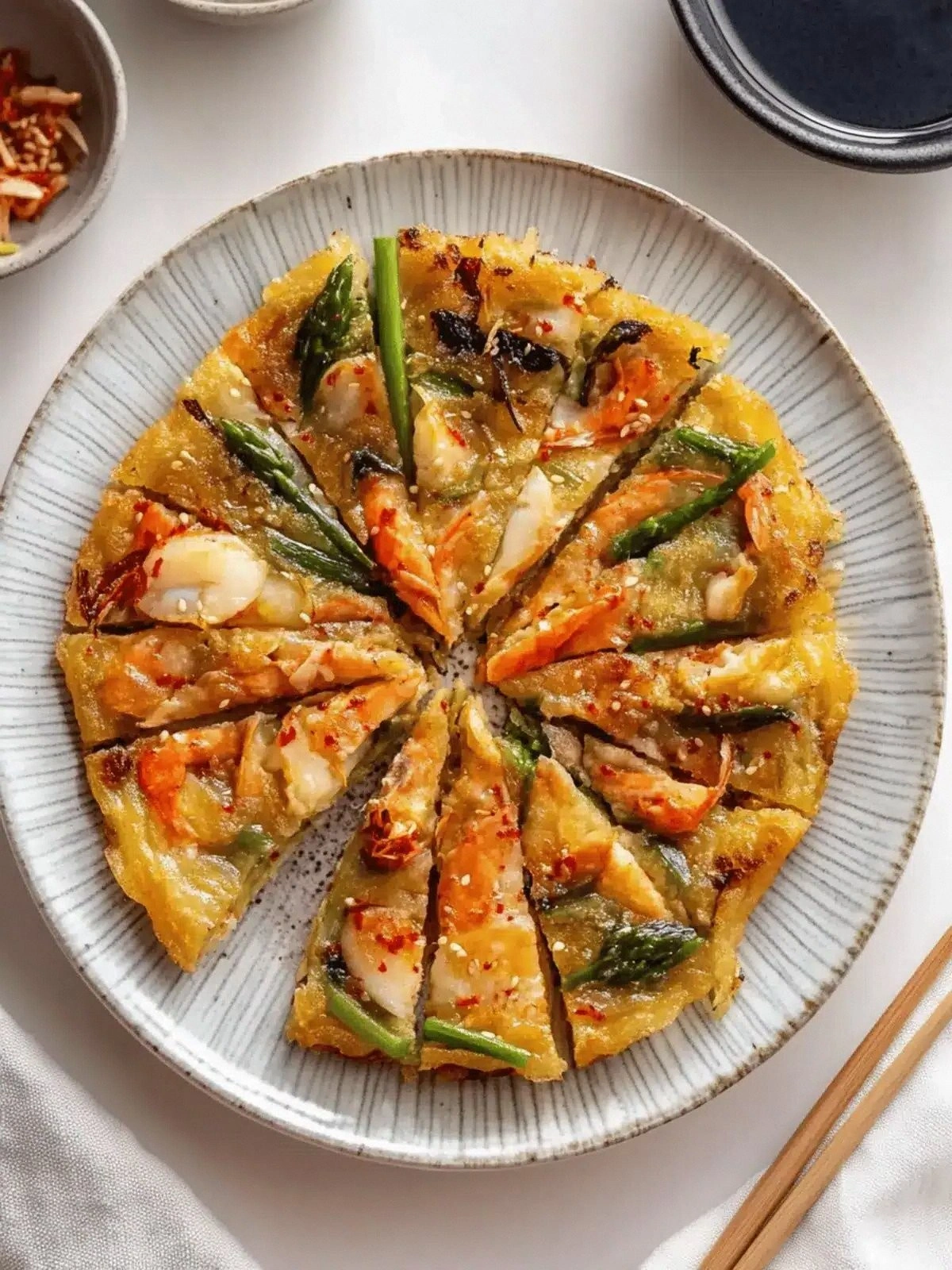
- Once cooked, transfer the pancake to a cutting board and drizzle with sesame oil. Sprinkle toasted sesame seeds and chopped green onions on top. Slice the pancake into wedges and serve hot with a side of soy sauce, rice vinegar, and a dash of gochugaru for dipping. The combination of savory, sweet, and spicy flavors will have your guests asking for the recipe.
That’s it — you did it. But hold on, I've got a few more tricks that'll take this to another level...
Insider Tricks for Flawless Results
The Temperature Rule Nobody Follows
The skillet should reach a steady 180°C (350°F) before you pour the batter. If the pan is too hot, the batter will brown too quickly and become uneven. I use a kitchen thermometer to check the temperature; a quick dip of the spatula should produce a steady, gentle sizzle.
Why Your Nose Knows Best
Before flipping, sniff the pancake. A slightly toasted, nutty aroma indicates the bottom is crisp enough. If you only see steam, the batter needs more time. Trusting your nose saves you from flipping too early and ruining the texture.
The 5-Minute Rest That Changes Everything
After cooking, let the pancake rest on a rack for 5 minutes. This allows the steam to escape and the edges to firm up, preventing a soggy center. The rest period also lets the flavors meld, creating a more cohesive taste.
Use a Non-Stick Skillet for Even Cooking
A good non-stick skillet ensures the pancake lifts easily. If you’re using a cast-iron pan, preheat it slowly to avoid scorching. The even heat distribution is key to a uniform golden crust.
Add a Touch of Soy Sauce to the Batter
Mixing a tablespoon of soy sauce into the batter before cooking adds depth and umami. It also slightly darkens the color, giving the pancake an inviting appearance. This trick is optional but highly recommended for an extra flavor punch.
Creative Twists and Variations
This recipe is a playground. Here are some of my favorite ways to switch things up:
Mild Mushroom Medley
Swap the shrimp and calamari for sliced shiitake mushrooms and a handful of spinach. The earthy flavor pairs well with the sesame oil, creating a vegetarian version that still delivers crunch.
Spicy Kimchi Surprise
Fold in a tablespoon of chopped kimchi into the batter before frying. The fermented tang adds a complex depth, turning the pancake into a Korean comfort food staple.
Herbal Delight
Add chopped fresh cilantro and mint to the batter, and finish with a squeeze of lime. The bright herbs provide a refreshing contrast to the savory seafood.
Cheesy Crunch
Mix in 1/4 cup of shredded mozzarella into the batter before cooking. The cheese melts into pockets of gooeyness that break apart with each bite, offering a decadent twist.
Sweet Coconut Finish
Drizzle a light coconut milk reduction over the finished pancake. The subtle sweetness balances the spicy gochugaru, making it an ideal dessert-style appetizer.
Storing and Bringing It Back to Life
Fridge Storage
Cool the pancakes to room temperature, then store them in an airtight container in the fridge for up to 3 days. The crispness may soften slightly, but they remain delicious.
Freezer Friendly
Place a parchment paper layer between each pancake and freeze for up to 2 weeks. Reheat in a skillet with a splash of water to steam them back to life.
Best Reheating Method
To restore crispness, reheat each pancake in a dry skillet over medium heat for 2-3 minutes per side. A tiny splash of water before reheating will steam the interior, preventing it from drying out.