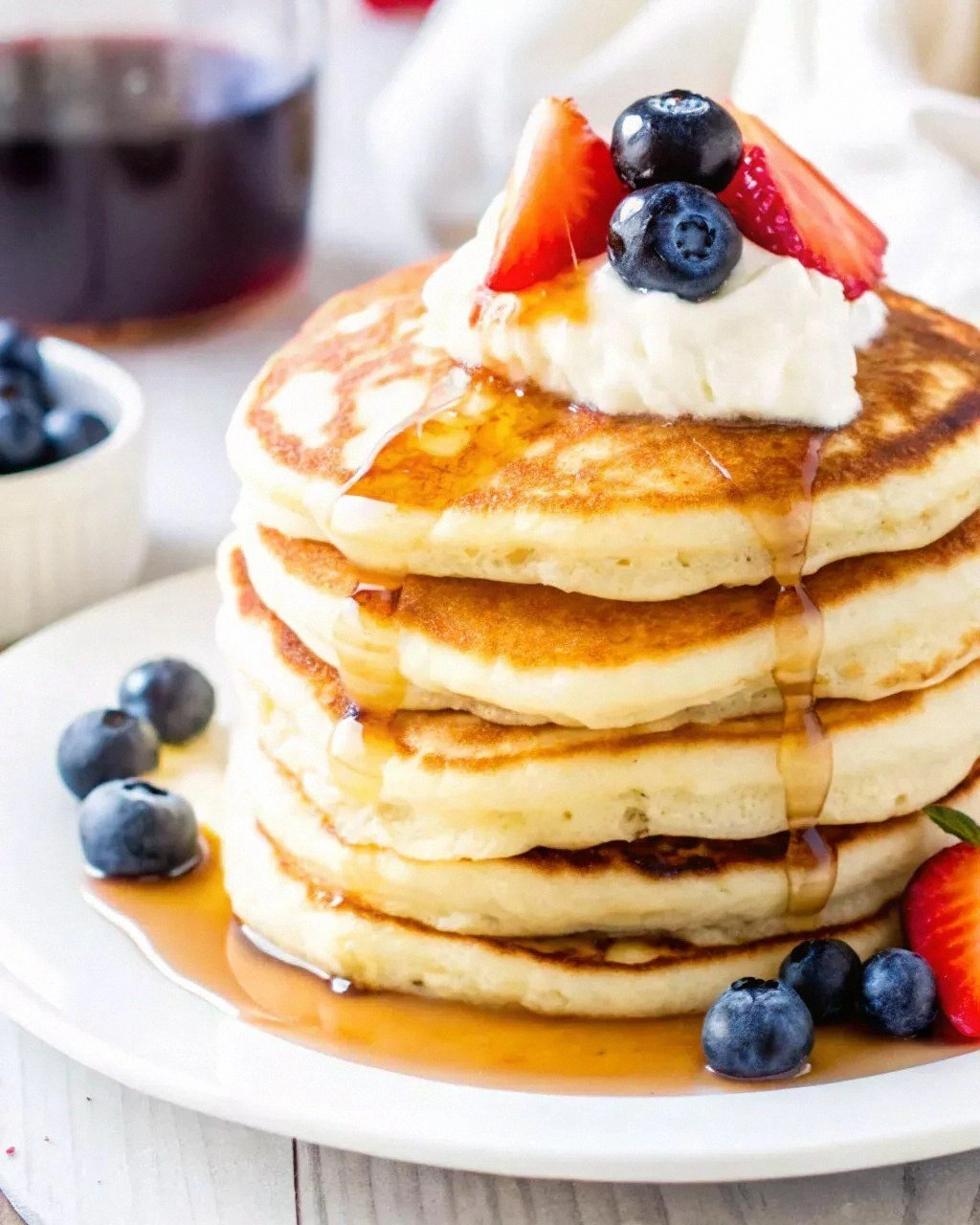
I still remember the morning I ruined a perfectly good batch of pancakes. There I stood, spatula in hand, staring at a griddle full of flat, rubbery discs that looked more like coasters than breakfast. My friend Sarah had bet me twenty bucks that I couldn't make pancakes from scratch without a box mix, and I was about to lose spectacularly. But here's where the story gets interesting — instead of admitting defeat, I became obsessed. I spent the next three weeks testing every possible pancake variable like some kind of breakfast-obsessed mad scientist, and that's how these Greek yogurt pancakes were born.
The breakthrough came at 6:47 AM on a Tuesday when I ran out of milk and had to improvise with the only dairy I had left: a tub of thick, creamy Greek yogurt. The moment that first experimental pancake hit the pan, I knew something magical was happening. The batter puffed up like a proud soufflé, creating these incredible air pockets that promised fluffiness beyond my wildest dreams. That distinctive sizzle when the yogurt-enriched batter meets hot butter? Pure perfection. It sounds like breakfast applauding itself.
Now, I've made these pancakes over 200 times (yes, I counted), and I can confidently say this is hands down the best version you'll ever make at home. The Greek yogurt doesn't just replace the milk — it transforms the entire pancake experience. We're talking about pancakes so fluffy they practically float off your plate, with a tangy complexity that makes maple syrup taste like it graduated from college. The protein boost means you won't be starving again by 10 AM, and the texture? Imagine if a cloud and a buttermilk biscuit had a beautiful baby.
Let me walk you through every single step — by the end, you'll wonder how you ever made it any other way.
What Makes This Version Stand Out
Protein Powerhouse: Each serving packs a whopping 25 grams of protein, turning your weekend indulgence into legitimate fuel. You'll feel satisfied for hours instead of riding the sugar-crash rollercoaster that comes with regular pancakes. I dare you to taste this and not go back for seconds — though honestly, you might not need to because they'll keep you full that long.
Fail-Proof Fluff: The Greek yogurt creates an acid-base reaction with the baking powder that produces carbon dioxide bubbles, giving you lift that defies gravity. Most recipes get this completely wrong by using too much liquid. Here's what actually works: thick, strained yogurt that barely moves when you tip the container.
One-Bowl Wonder: Everything mixes in a single bowl, which means fewer dishes and less chance of overmixing. Overmixing is the enemy of tender pancakes — those gluten strands tighten up like tiny rubber bands. With this method, you stir just until the flour disappears, and the yogurt's thickness prevents you from going overboard.
Weekend Prep Friendly: The batter actually improves after resting for 30 minutes, letting the flour fully hydrate. Picture yourself pulling this out of the oven, the whole kitchen smelling incredible, while your family thinks you've been slaving away for hours. I mix the dry ingredients the night before and just whisk in the wet stuff while the coffee brews.
Flavor Depth: That tangy Greek yogurt brings a subtle complexity that makes people ask "what's your secret?" It's like the difference between flat soda and champagne — both sweet, but only one makes your taste buds dance. The acidity also balances the sweetness of the maple syrup perfectly.
Texture Transformation: These aren't just fluffy — they're ethereally light with crispy, lacy edges that shatter like thin ice. The yogurt creates this incredible contrast between the cloud-soft interior and the golden-brown exterior. If you've ever struggled with gummy or dense pancakes, you're not alone — and I've got the fix.
Alright, let's break down exactly what goes into this masterpiece...
Inside the Ingredient List
The Flavor Base
Greek yogurt isn't just a milk substitute here — it's the foundation of everything magical about these pancakes. You want the full-fat, strained variety that's thick enough to hold its shape when you dollop it. The protein content creates structure while the natural tang provides balance against the sweetness. Skip the non-fat stuff — it makes watery, sad pancakes that taste like diet food. My go-to brand is Fage Total, but any thick, Greek-style yogurt works as long as it's not sweetened.
The eggs need to be large, not medium or extra-large, because baking is chemistry and we're counting on specific ratios. Room temperature eggs blend more smoothly and help create that uniform texture we're after. If you've ever had pancakes with weird eggy pockets, it's because someone used cold eggs that didn't incorporate properly. Let them sit on the counter for 20 minutes while you prep everything else.
The Texture Crew
All-purpose flour provides the gluten network that gives pancakes structure, but we're using a light hand here. Too much flour and you'll get hockey pucks; too little and they fall apart when you flip them. I spoon the flour into the measuring cup and level it off with a knife — never scoop directly from the bag or you'll pack in 20% more flour than intended. The protein in the yogurt means we can use less flour than traditional recipes, keeping things tender.
Baking powder and baking soda work as a team here, and this is where most recipes mess up. You need both for maximum lift — the baking soda reacts with the yogurt's acid immediately, while the baking powder provides a secondary boost when it hits the heat. If you've ever had pancakes that rise beautifully in the pan but deflate on the plate, someone skipped the baking powder. Freshness matters too — if your baking powder has been sitting in the cupboard since 2019, toss it.
The Unexpected Star
A tablespoon of honey might seem unnecessary when you'll drown these in maple syrup anyway, but hear me out. The honey caramelizes during cooking, creating these gorgeous golden-brown spots and adding depth that plain sugar can't match. It also helps keep the pancakes moist, preventing that disappointing dryness that sometimes plagues whole-grain pancakes. If you skip this, the pancakes still work, but they're like a movie without a soundtrack — technically fine, missing the magic.
Vanilla extract warms up all the flavors and makes your kitchen smell like a bakery. Use the real stuff, not the imitation vanilla that tastes like sadness and regret. You only need a teaspoon, but it bridges the gap between the tangy yogurt and sweet maple syrup. This is your flavor insurance policy — everything tastes more expensive with good vanilla.
The Final Flourish
Melted butter in the batter serves dual purposes: richness and insurance against sticking. The milk solids in butter brown during cooking, creating those coveted crispy edges that make people fight over the last pancake. I use unsalted butter because the yogurt already has a tangy quality, and salted butter can push things into overwhelming territory. Plus, it lets you control the salt separately.
Speaking of salt, don't skip it even in sweet recipes. A quarter teaspoon makes all the other flavors pop like turning up the brightness on a photo. It's the difference between flat, boring pancakes and ones that make people close their eyes when they take the first bite. If you've ever wondered why restaurant desserts taste better, it's because professionals understand that salt amplifies sweetness.
Everything's prepped? Good. Let's get into the real action...
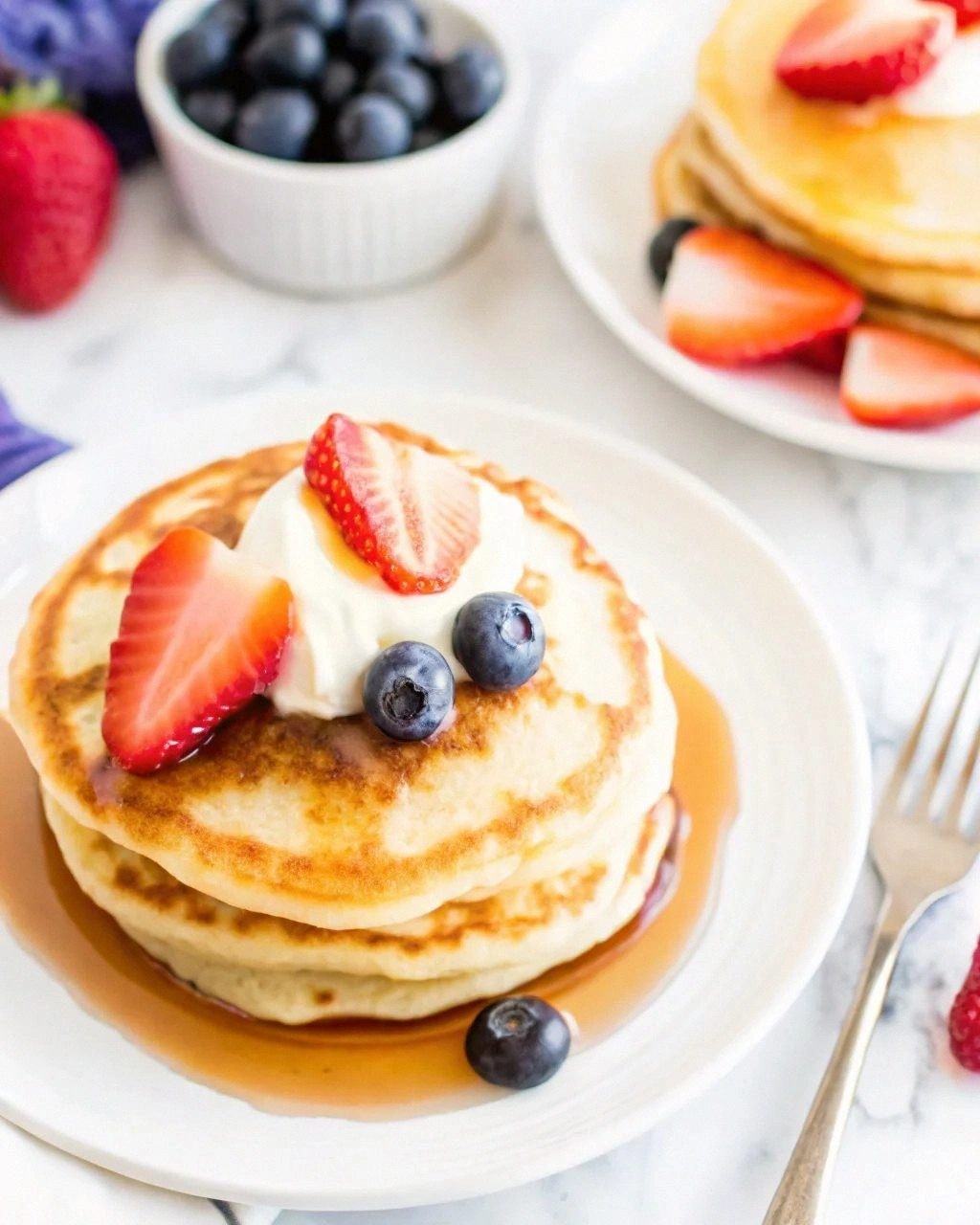
The Method — Step by Step
- Start by whisking together your dry ingredients in a large bowl — flour, baking powder, baking soda, and salt. Use a balloon whisk and really aerate the mixture for about 30 seconds. This distributes the leavening agents evenly so you don't get one pancake that explodes like a volcano while the next one stays flat. The whisking also breaks up any flour lumps that could create weird dry pockets in your finished pancakes. Think of this as insurance against disappointment.
- In a separate medium bowl, whisk the Greek yogurt until it's smooth and creamy. Add the eggs one at a time, whisking thoroughly after each addition. The yogurt will initially seize up when the eggs hit it — this is normal, don't panic. Keep whisking and it will relax into a smooth, pudding-like consistency. This step is crucial because you want the yogurt base completely smooth before adding anything else.
- Stream in the melted butter while whisking constantly. The butter should be cooled but still liquid — if it's too hot, it'll scramble the eggs and you'll have to start over. The mixture will thicken slightly as the butter emulsifies with the yogurt. This creates a rich base that will make your pancakes incredibly tender. Okay, ready for the game-changer?
- Add the honey and vanilla extract to the wet mixture, whisking until everything is glossy and smooth. The batter should coat your whisk like velvet and fall in thick ribbons. If it seems too stiff, don't worry — we're about to thin it out. Resist the urge to add milk at this stage; the flour will loosen things up significantly.
- Make a well in the center of your dry ingredients and pour in the wet mixture. Using a rubber spatula, fold everything together with slow, deliberate strokes. Stop mixing as soon as you don't see any dry flour — the batter should be lumpy and thick, like cottage cheese. Overmixing develops gluten and creates tough, chewy pancakes that nobody wants. This next part? Pure magic.
- Let the batter rest for 10 minutes while you heat your griddle. During this time, the flour absorbs the liquid and the baking powder starts working. You'll notice the batter puffing up slightly — this is exactly what we want. Meanwhile, heat a cast-iron skillet or griddle over medium heat. Test the temperature by sprinkling a few drops of water on the surface — they should dance and evaporate within 2-3 seconds.
- Grease the griddle with a small pat of butter, swirling to coat the surface lightly. Too much butter and your pancakes will fry instead of griddle, creating greasy edges. Use a 1/4-cup measuring cup to portion the batter, dropping it onto the griddle and resisting the urge to spread or flatten it. The batter should sizzle gently when it hits the pan — that sizzle when it hits the pan? Absolute perfection.
- Cook for 2-3 minutes until bubbles form on the surface and the edges look set. Don't flip too early or you'll have a mess on your hands. When ready to flip, the underside should be golden brown with darker edges. Use a thin spatula and flip confidently — hesitation leads to folding disasters. Cook the second side for 1-2 minutes until golden. I'll be honest — I ate half the batch before anyone else got to try it, standing right there at the stove.
That's it — you did it. But hold on, I've got a few more tricks that'll take this to another level...
Insider Tricks for Flawless Results
The Temperature Rule Nobody Follows
Your griddle temperature is everything, and most people get it wrong. Too hot and the outsides burn before the insides cook, leaving you with pancakes that are black and raw simultaneously. Too cool and they spread out thin and pale, absorbing grease like little edible sponges. The sweet spot is medium heat, but here's the secret: adjust as you go. After every batch, your griddle gets hotter, so you need to dial it back slightly. I keep a small dish of water nearby and test frequently — when the drops stop dancing and just sit there, it's time to lower the heat.
Why Your Nose Knows Best
Forget timers — your nose is the best kitchen tool you own. When the butter starts to smell nutty and golden, that's your cue that the pancakes are ready to flip. This happens about 30 seconds before visual cues appear, giving you perfectly cooked pancakes every time. The aroma of properly browned butter is distinctly different from burnt butter, and once you learn to recognize it, you'll never overcook another pancake. A friend tried skipping this step once — let's just say it didn't end well, and her smoke detector still holds a grudge.
The 5-Minute Rest That Changes Everything
After mixing your batter, let it rest for at least 5 minutes before cooking. This isn't just busy work — it allows the flour to fully hydrate and the gluten to relax, creating more tender pancakes. During this time, you can heat your griddle, set out plates, and maybe start some bacon. The batter will thicken slightly as the flour absorbs the liquid, which is exactly what you want. If you rush this step, your pancakes will be tough and slightly raw-tasting in the center. Trust me, I've tested batches side by side, and the rested batter always wins.
The Flip That Makes Them Professional
Here's where home cooks mess up: they try to flip pancakes like they're turning steaks. Pancakes need a gentle, confident flip using a thin, flexible spatula. Slide the spatula under the pancake, lift just enough to clear the surface, then rotate your wrist in one smooth motion. Don't hesitate mid-flip or you'll end up with a folded mess. The best part? Even ugly pancakes taste delicious, so don't stress if your first few look like abstract art. My daughter calls them "modern art pancakes" and charges her brother extra for them.
Creative Twists and Variations
This recipe is a playground. Here are some of my favorite ways to switch things up:
Lemon Blueberry Clouds
Fold in the zest of two lemons and a cup of fresh blueberries just before cooking. The yogurt's tang pairs beautifully with bright lemon, while the blueberries burst during cooking, creating little pockets of jammy sweetness. Dust with powdered sugar instead of drowning in syrup — these pancakes are so flavorful they don't need much help. My neighbor begs for these every summer when her blueberry bushes go crazy.
Chocolate Chip Pillow Pancakes
Add 1/2 cup mini chocolate chips to the batter and cook as usual. The mini chips distribute more evenly than regular ones, giving you chocolate in every bite without overwhelming the delicate yogurt flavor. Use dark chocolate chips for sophistication or milk chocolate for pure indulgence. These are dangerously good — I once ate eight in one sitting and didn't even feel bad about it.
Savory Herb Garden Pancakes
Omit the honey and vanilla, add 2 tablespoons chopped fresh dill, 1 tablespoon minced chives, and 1/2 cup crumbled feta. Serve with smoked salmon and a dollop of sour cream for a brunch that'll make you feel like you're at a fancy hotel. These are incredible as a base for eggs Benedict, soaking up hollandaise like a sponge. My mother-in-law, who claims to hate pancakes, requests these monthly.
Pumpkin Spice Autumn Stacks
Replace 1/4 cup of the flour with pumpkin puree, add 1 teaspoon cinnamon, 1/2 teaspoon each of ginger and nutmeg. The pumpkin adds moisture and creates an even fluffier texture, while the spices make your kitchen smell like fall. These are like eating pumpkin pie for breakfast, but with 25 grams of protein instead of guilt. Top with candied pecans and maple syrup for the full autumn experience.
Tropical Coconut Dreams
Substitute coconut oil for the butter, add 1/2 cup shredded coconut and 1/2 cup diced pineapple (well-drained). The coconut oil adds subtle sweetness while the pineapple provides bright, tropical notes. These transport you to a beach vacation, even when you're eating them in a snowstorm. My kids call them "Hawaii pancakes" and request them every Sunday.
Cinnamon Roll Pancakes
Make a cinnamon swirl by mixing 2 tablespoons softened butter with 2 tablespoons brown sugar and 1 teaspoon cinnamon. Dollop this mixture onto the pancakes after you pour them on the griddle, then swirl with a toothpick. The cinnamon mixture caramelizes, creating the flavors of a cinnamon roll in pancake form. Drizzle with cream cheese glaze (cream cheese, powdered sugar, vanilla, and a splash of milk) for the full experience. These are decadent enough for dessert but healthy enough for breakfast — the best of both worlds.
Storing and Bringing It Back to Life
Fridge Storage
Let the pancakes cool completely on a wire rack before storing — this prevents condensation that leads to sogginess. Layer them between sheets of parchment paper in an airtight container, where they'll keep for up to 5 days. The parchment prevents them from sticking together, so you can grab just one or two for a quick breakfast. Store them plain, without syrup or toppings, which keeps them fresher longer. I make double batches on Sunday and we're set for the week.
Freezer Friendly
These pancakes freeze beautifully and reheat like a dream. Flash-freeze them first by placing them in a single layer on a baking sheet for 2 hours, then transfer to freezer bags. This prevents them from freezing into one solid pancake brick that requires a chisel to separate. They'll keep for up to 3 months, though honestly, mine never last that long. Label the bags with the date — frozen pancakes have a way of getting lost in the freezer abyss.
Best Reheating Method
The toaster is your best friend for reheating — it crisps up the edges while warming the centers perfectly. 2-3 minutes on medium heat brings them back to fresh-from-the-griddle status. Avoid the microwave unless you enjoy rubbery, steamed pancakes that taste like sadness. For a crowd, reheat on a baking sheet in a 300°F oven for 8-10 minutes. Add a tiny splash of water before reheating — it steams back to perfection and prevents drying out.