I still remember the night my friend dared me to create a noodle soup that could win a Michelin star, all while I was juggling a half‑baked pizza and a phone call about a job interview. The kitchen smelled of burnt garlic, the timer buzzed, and I was left with a bowl of lukewarm broth that tasted like disappointment. I swore that this would be the night I would rewrite the rules for miso noodle soup. The result? A steaming bowl that sings with umami, a silky miso sauce that coats noodles like velvet, and a crunch of toasted sesame that snaps like thin ice. I’m about to walk you through every single step, and by the end, you’ll wonder how you ever made it any other way.
What Makes This Version Stand Out
- Umami Explosion: The combination of white miso and fermented soy sauce creates a depth that feels like a secret garden hidden behind the ramen bowl.
- Texture Harmony: Noodles, tofu, and vegetables are balanced so that each bite delivers a satisfying chew, a silky slip, and a gentle snap.
- Quick Prep: From chopping to simmering, the entire process takes under an hour—perfect for a weekday dinner or a last‑minute gathering.
- Clean Ingredients: No MSG or artificial additives, just pure plant‑based goodness that feels indulgent without guilt.
- Versatile Base: The broth can be turned into a hearty stew, a light salad dressing, or even a dipping sauce for dumplings.
- Make‑Ahead Friendly: The soup keeps its flavor profile after refrigeration or freezing, making it ideal for meal prep.
- Visual Appeal: Vibrant colors from spinach, carrots, and nori strips create a dish that looks as good as it tastes.
Alright, let's break down exactly what goes into this masterpiece…
Inside the Ingredient List
The Flavor Base
At the heart of this soup lies the miso paste, a fermented soybean spread that carries centuries of tradition. White miso, with its subtle sweetness, is the star of this recipe, but a touch of red miso can add a smoky depth if you’re feeling adventurous. The vegetable broth acts as the liquid canvas, allowing the miso to unfurl its complex notes. A splash of rice vinegar balances the richness, cutting through the umami for a bright finish.
The Texture Crew
Silky tofu offers a creamy contrast that melts into the broth, while shiitake mushrooms bring earthy heft and a meaty chew. Baby spinach and carrots contribute a pop of color and a gentle crunch that keeps the dish from feeling soggy. Noodles—whether ramen, soba, or udon—absorb the sauce, becoming a silky conduit for every flavor. Sesame oil, brushed lightly over the vegetables, adds a nutty aroma that lingers long after the last spoonful.
The Unexpected Star
Scallions and toasted sesame seeds are not just garnish; they’re essential for the final layer of freshness. The scallions’ sharpness cuts through the richness, while the sesame seeds deliver a satisfying crunch. A sheet of nori, sliced into thin strips, floats like tiny seaweed confetti, adding a briny whisper that ties everything together. The optional chili flakes give a gentle heat that dances on the palate, making the soup feel alive.
The Final Flourish
A drizzle of soy sauce at the end of cooking brings a salty, savory finish that elevates the entire bowl. A splash of fresh ginger and minced garlic at the start creates an aromatic foundation that permeates the broth. Finally, a light squeeze of lime or lemon juice before serving adds a bright, citrusy note that balances the sweetness of the miso.
Everything's prepped? Good. Let's get into the real action…
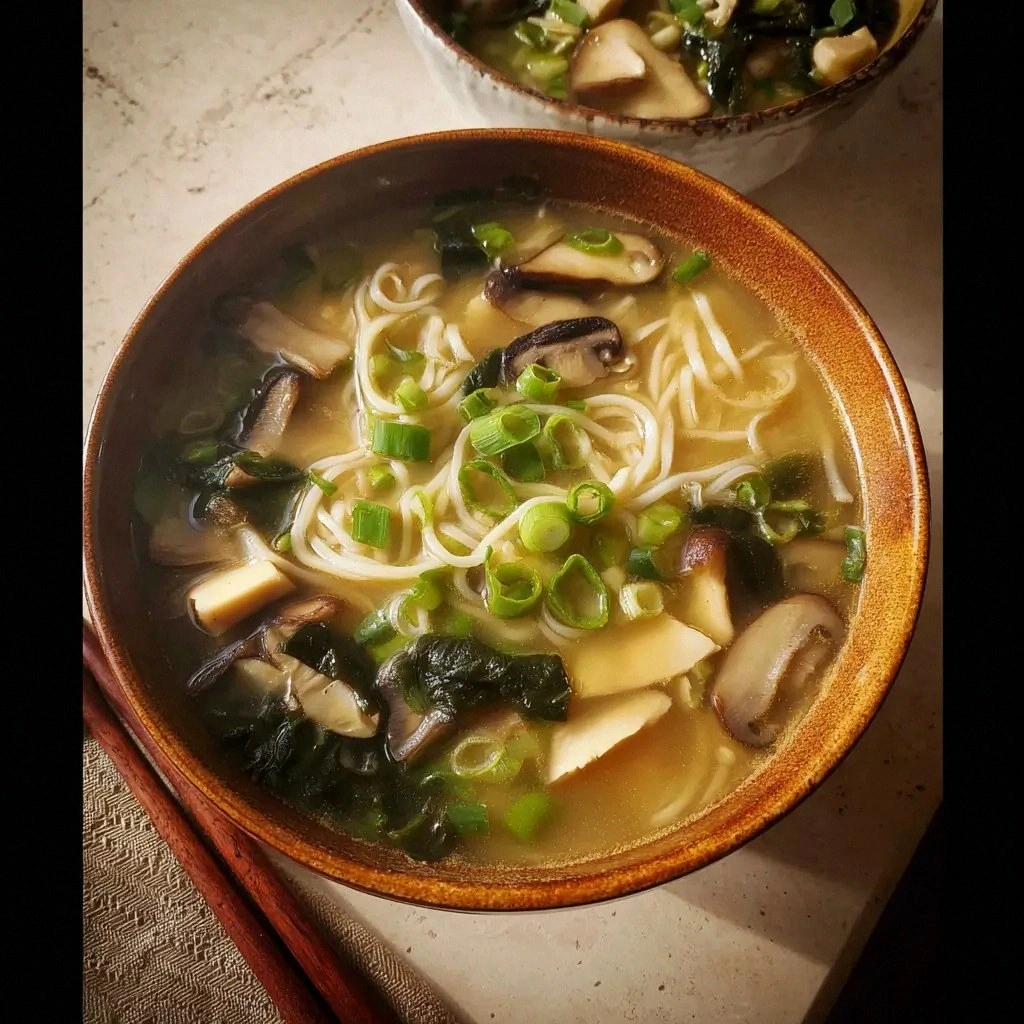
The Method — Step by Step
- Heat the sesame oil in a large pot over medium heat. Add the minced garlic and grated ginger, sautéing until fragrant and slightly golden—about 30 seconds. This step releases the aromatics, turning the oil into a fragrant base that coats every noodle and vegetable. The aroma should feel like a warm hug.
- Pour in the vegetable broth and bring it to a gentle boil. Reduce the heat to a simmer and stir in the miso paste until fully dissolved. The broth should bubble softly, not violently, and the miso should coat the liquid like a translucent glaze. This creates the base that carries all the other flavors.
- Add the sliced shiitake mushrooms, julienned carrots, and tofu cubes to the pot. Simmer for 5 minutes, allowing the vegetables to soften while the tofu absorbs the miso‑rich broth. The mushrooms should release their juices, creating a slightly thickened sauce. The tofu should stay intact, offering a gentle, custard‑like bite.
- Stir in the soy sauce and rice vinegar, then add the noodles. Cook according to the noodle package instructions—usually 3 to 4 minutes for ramen or 5 minutes for soba—until al dente. The noodles should feel firm yet tender, soaking up the sauce without becoming mushy.
- Add the baby spinach and let it wilt, which should take about a minute. The spinach will release a subtle earthy aroma and turn a bright green, adding both color and nutrition. This step ensures the broth remains light while the greens provide a fresh counterpoint.
- At this point, the soup should be aromatic, savory, and slightly sweet. Turn off the heat, drizzle in the lime or lemon juice, and sprinkle the toasted sesame seeds and scallion slices on top. The citrus brightens the soup, while the seeds add a delightful crunch. This final flourish turns the bowl into a masterpiece.
- Serve hot, ladling the broth into bowls and topping each with a sheet of nori. The nori should be crisp enough to hold its shape, offering a subtle briny bite that contrasts with the creamy miso. If you like a little heat, sprinkle a pinch of chili flakes over the top. This final touch adds a gentle kick that makes the dish feel alive.
That's it — you did it. But hold on, I've got a few more tricks that'll take this to another level…
Insider Tricks for Flawless Results
The Temperature Rule Nobody Follows
Many cooks think that a high simmer is best, but a low, steady boil preserves the delicate flavors of miso and the subtlety of the vegetables. Keep the heat at 180–190°F (80–90°C) and let the broth bubble gently. This slow extraction allows the miso to release its complex notes without becoming bitter.
Why Your Nose Knows Best
If the soup smells too sharp, add a splash of rice vinegar or a drop of soy sauce to mellow the acidity. Your nose is the ultimate judge of balance; trust it to tell you when the broth needs a touch of sweetness or salt.
The 5-Minute Rest That Changes Everything
After you remove the pot from heat, let the soup rest for five minutes before serving. This brief pause allows the flavors to meld and the noodles to settle, resulting in a richer, more harmonious bowl. I swear, the rest period is where the magic happens.
Use Fresh Ingredients for Freshness
Fresh ginger, garlic, and scallions bring a bright, sharp flavor that canned or dried versions can’t match. If you’re in a hurry, pre‑minced garlic and grated ginger from the freezer will do, but fresh is always better.
Keep It Clean and Tidy
A clean pot and utensils prevent the broth from picking up unwanted flavors. Wash your hands thoroughly before handling the tofu to avoid any off‑taste that could seep into the soup.
Creative Twists and Variations
This recipe is a playground. Here are some of my favorite ways to switch things up:
Spicy Szechuan Kick
Swap the chili flakes for Szechuan peppercorns and a spoonful of doubanjiang. The numbing heat pairs beautifully with the miso’s sweetness, creating a dish that’s both complex and comforting.
Seafood Surprise
Add a handful of shrimp or scallops in the last two minutes of cooking. The seafood will soak up the miso broth and add a luxurious, briny depth that elevates the soup.
Vegan Protein Boost
Replace tofu with tempeh or seitan. These proteins bring a firmer bite and a different flavor profile, making the soup feel like a hearty, plant‑based feast.
Root Vegetable Medley
Introduce sweet potato cubes or parsnip slices for a sweeter, earthier base. These roots caramelize slightly during cooking, adding a subtle caramel note to the broth.
Herb Garden Edition
Finish the soup with chopped cilantro, basil, or mint. The fresh herbs give a burst of brightness that cuts through the richness of the miso.
Storing and Bringing It Back to Life
Fridge Storage
Cool the soup completely before transferring it to a sealable container. Store in the refrigerator for up to 3 days. The broth will thicken slightly as it cools; add a splash of water or broth when reheating to restore its original consistency.
Freezer Friendly
Divide the soup into single‑serving portions and freeze for up to 2 months. When ready to eat, thaw overnight in the fridge and reheat gently on the stovetop, adding a bit of fresh broth or water to loosen the mixture.
Best Reheating Method
Reheat over low heat, stirring frequently. Add a teaspoon of water or vegetable broth to prevent the soup from drying out. Bring to a gentle simmer, then remove from heat and let it rest for a minute before serving.